1. General Industry Trends
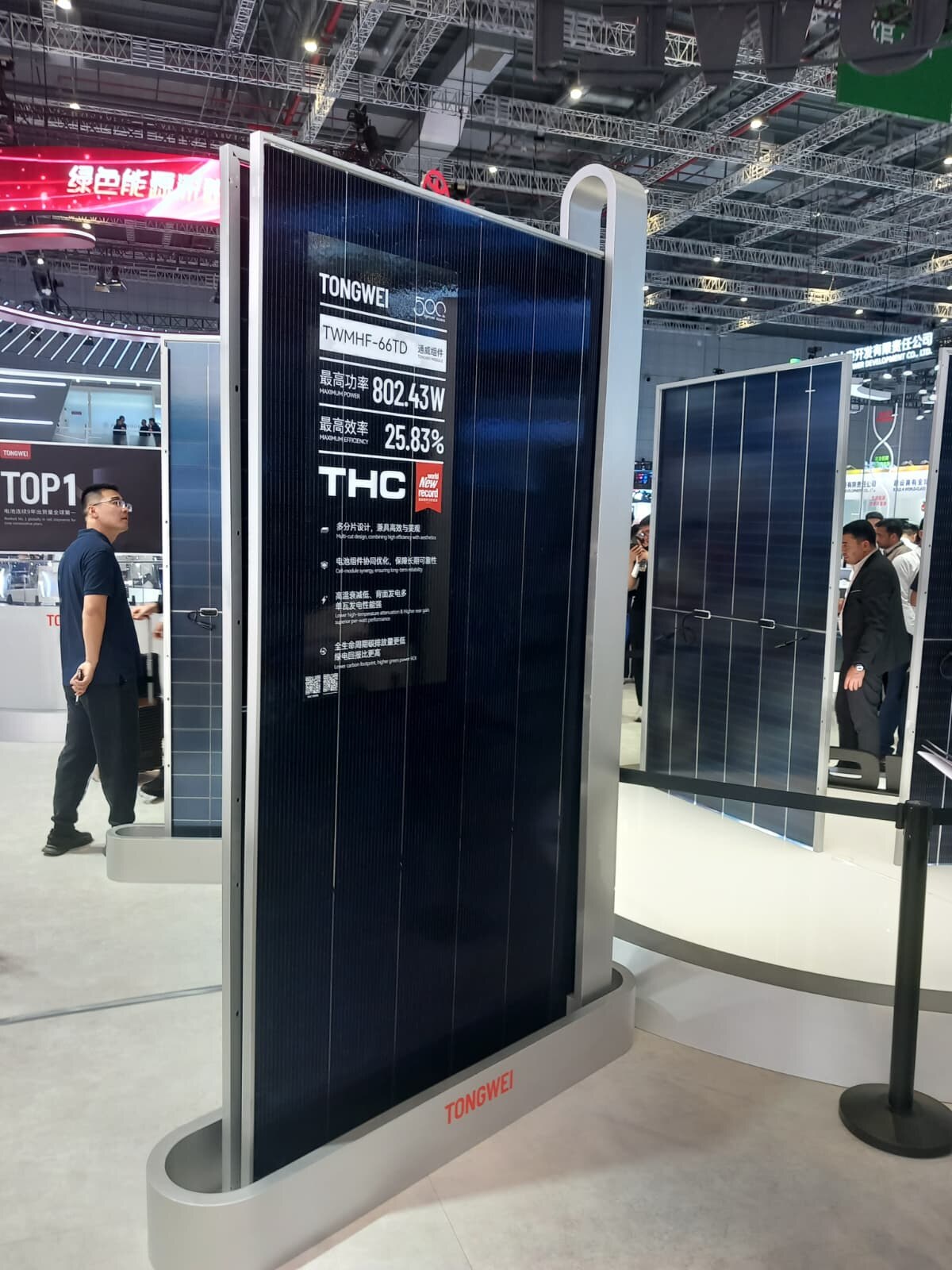
One of the most visible trends is the continued increase in PV module size and power output. Most major manufacturers presented flagship modules with power ratings above 800 W, typically based on module efficiencies between 24% and 25%. Large-area modules around or above 3 m² have become commonplace among leading manufacturers.
Compared to previous years, the exhibition itself appeared significantly smaller. According to discussions with attendees, the PV exhibition area was approximately three times larger a few years ago. At the same time, the event has increasingly shifted toward a combined PV and energy storage exhibition. Roughly half of the exhibition space was dedicated to battery systems and battery-related technologies, reflecting the growing importance of integrated PV-storage solutions.
2. Automation, Robotics, and Drones
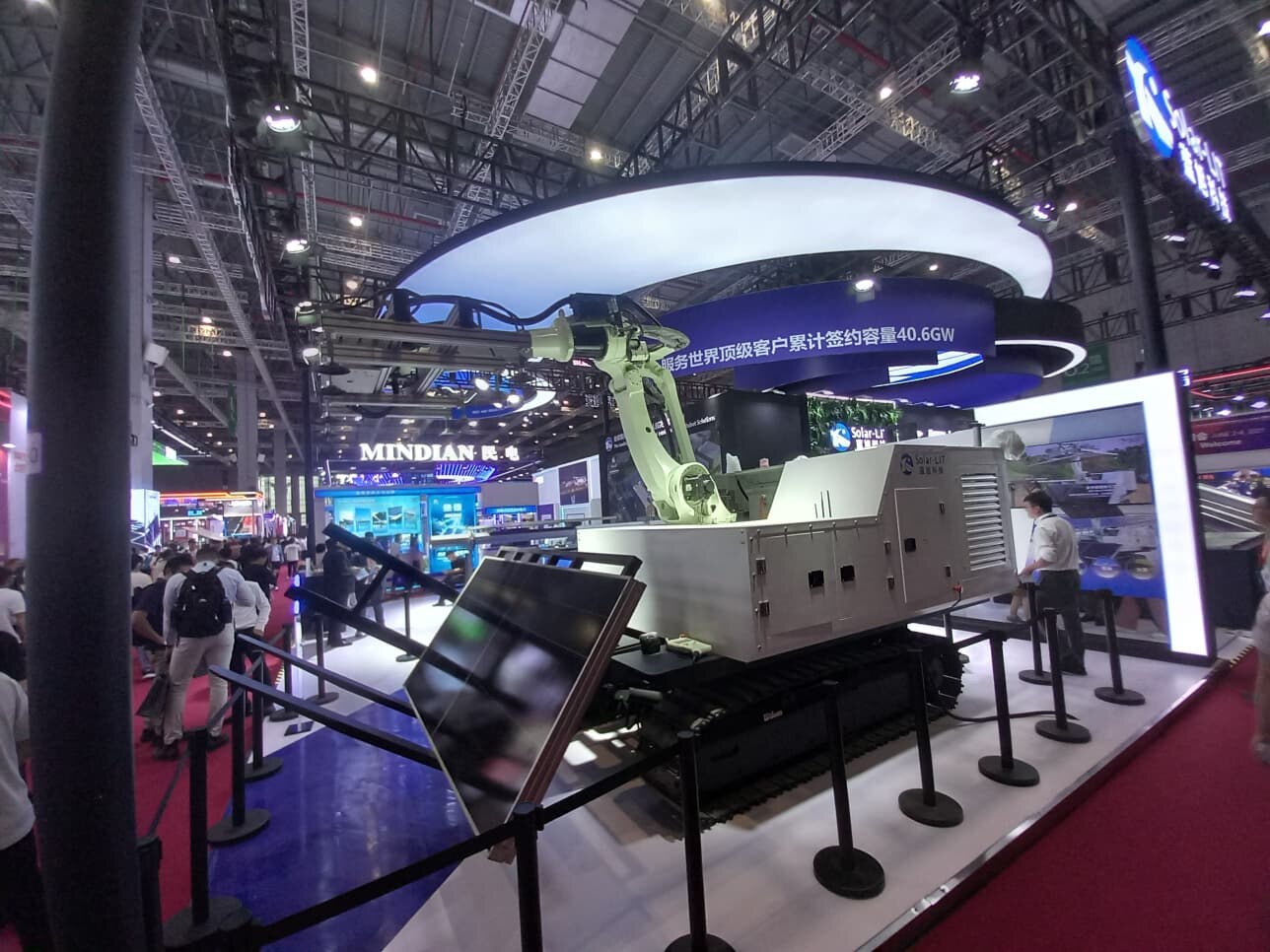
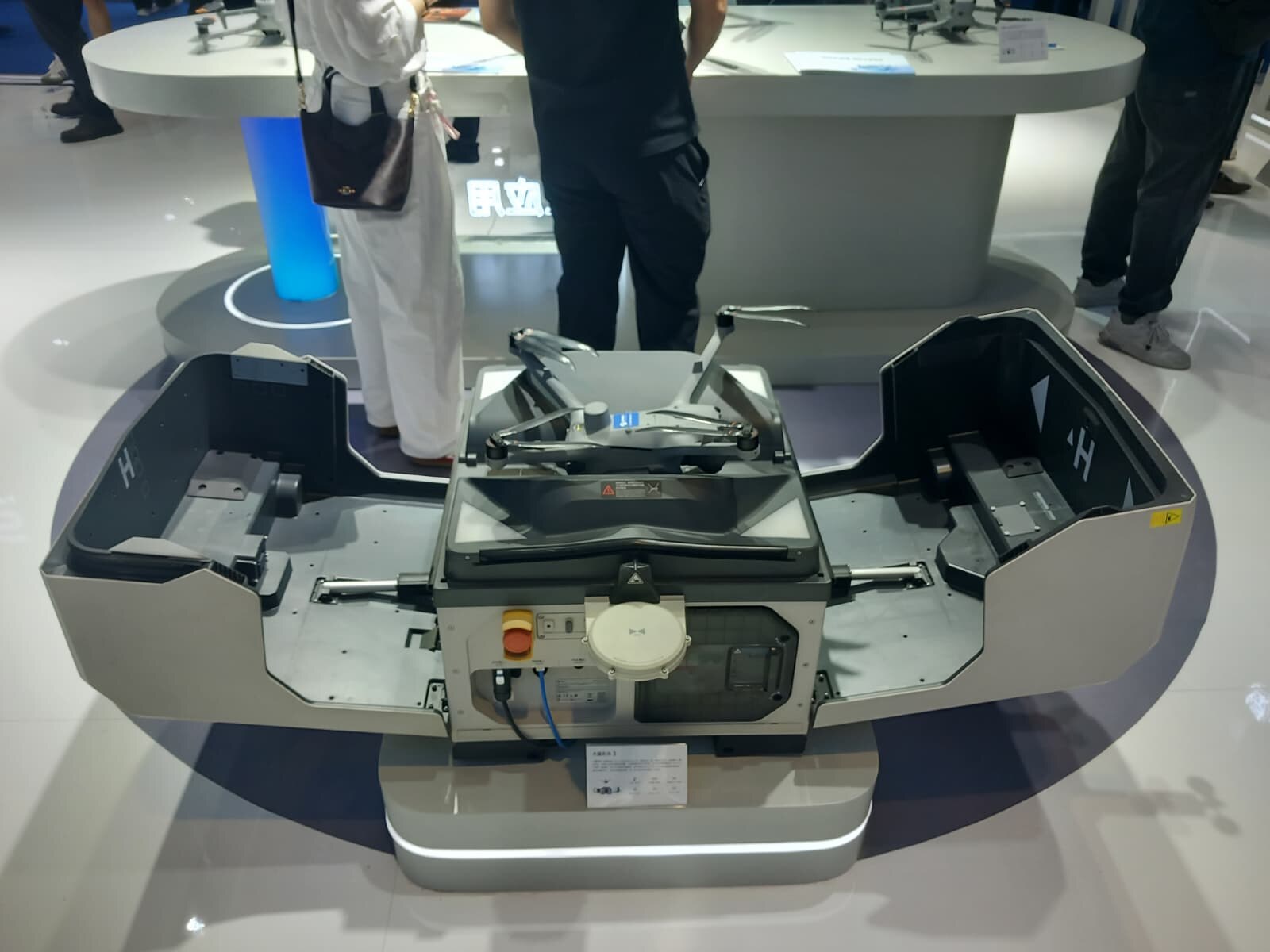
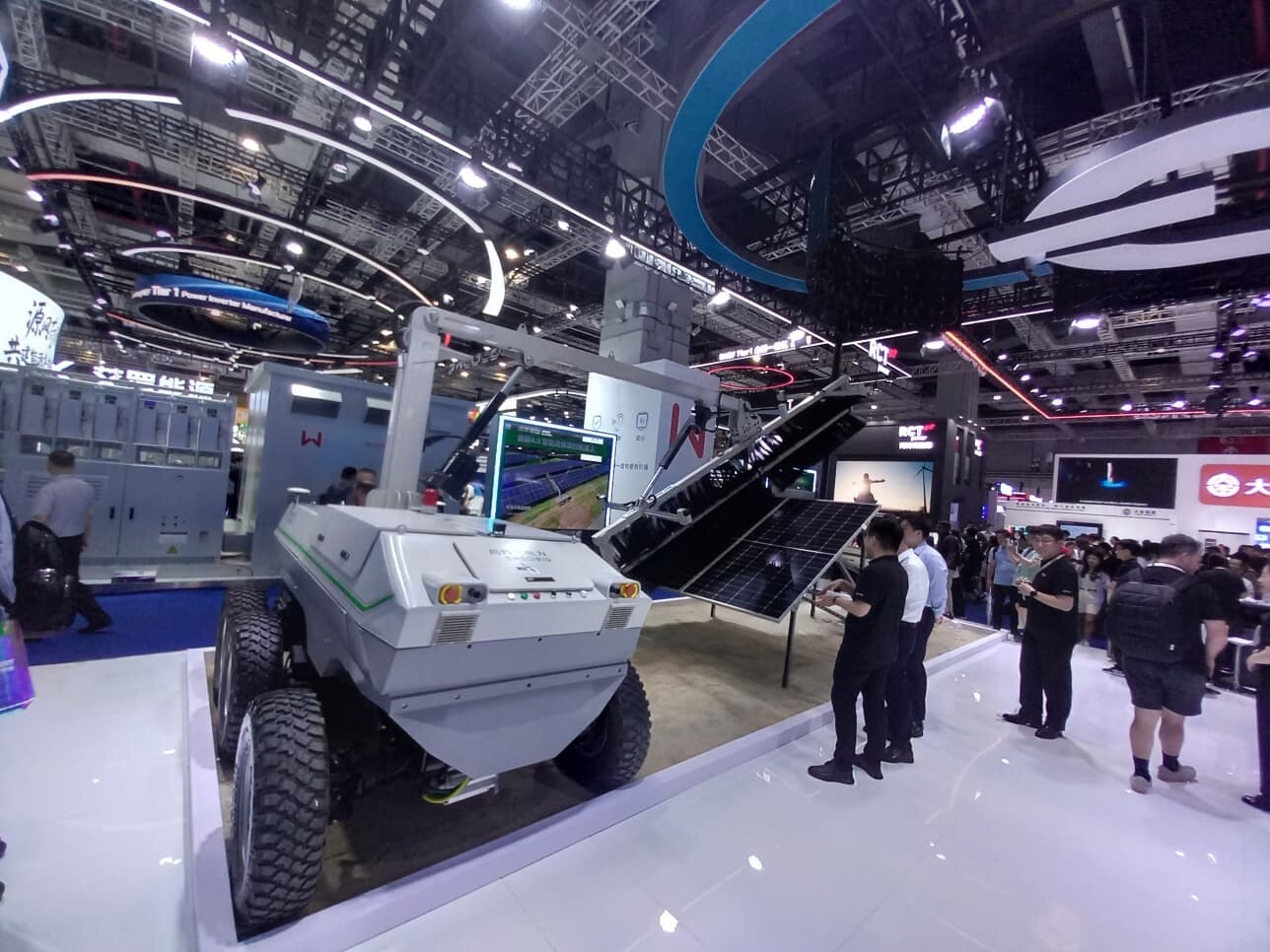
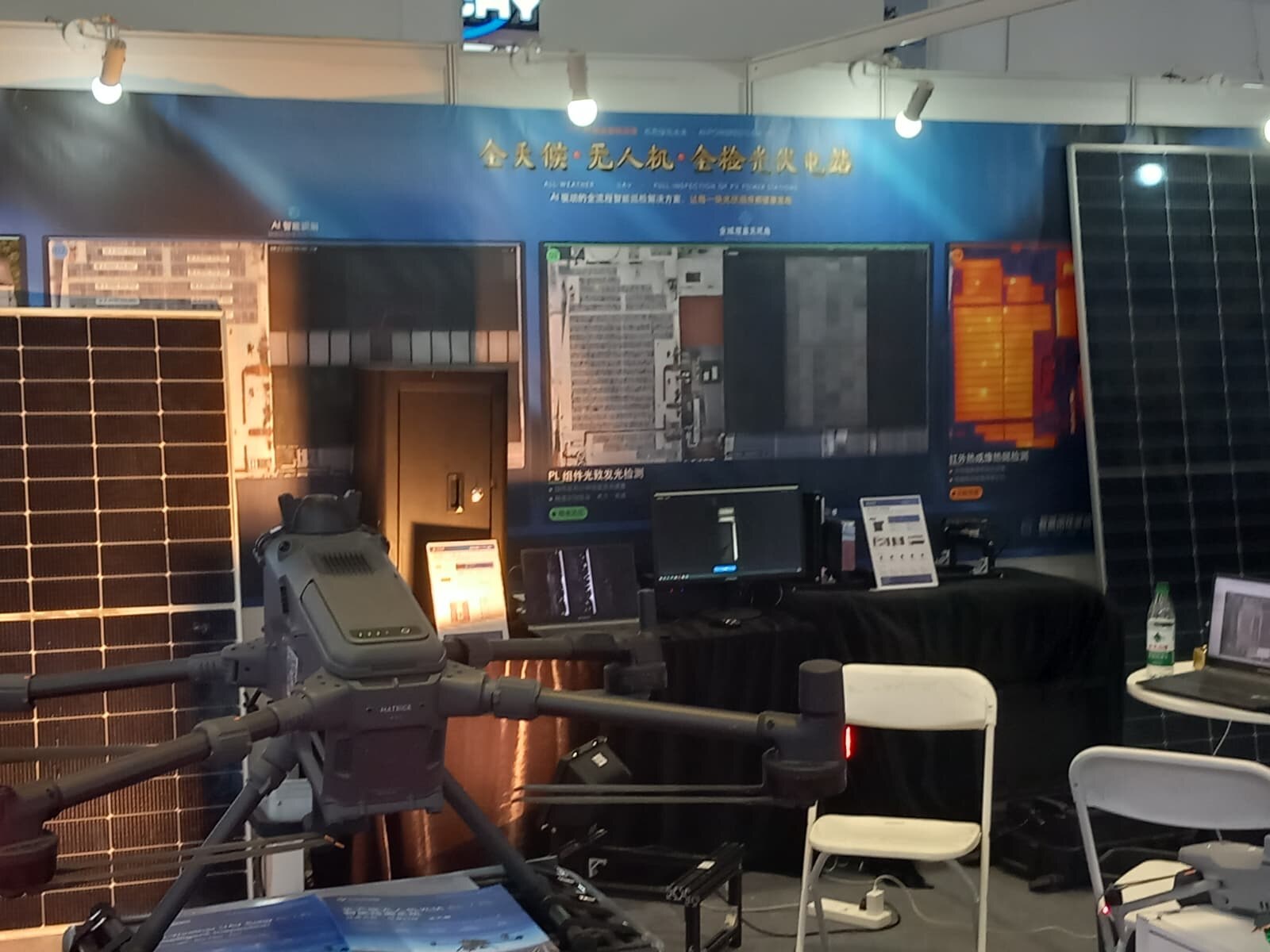
A particularly noticeable trend was the strong presence of automation technologies. Numerous exhibitors showcased drones, robots, and autonomous systems for PV plant construction, inspection, monitoring, cleaning, and maintenance.
Examples included:
- Drone-based PV monitoring systems
- Drone-in-a-box solutions for autonomous inspections
- Large industrial drones for maintenance and surveillance
- Robotic cleaning systems
- Autonomous ground vehicles for operation and maintenance
- Self-driving transport and deployment vehicles for utility-scale PV installations
3. Silicon PV Technologies
TOPCon has clearly established itself as the dominant commercial silicon technology. While heterojunction (HJT) technology remains visible in conference presentations and selected products, the vast majority of commercial offerings are now based on TOPCon.
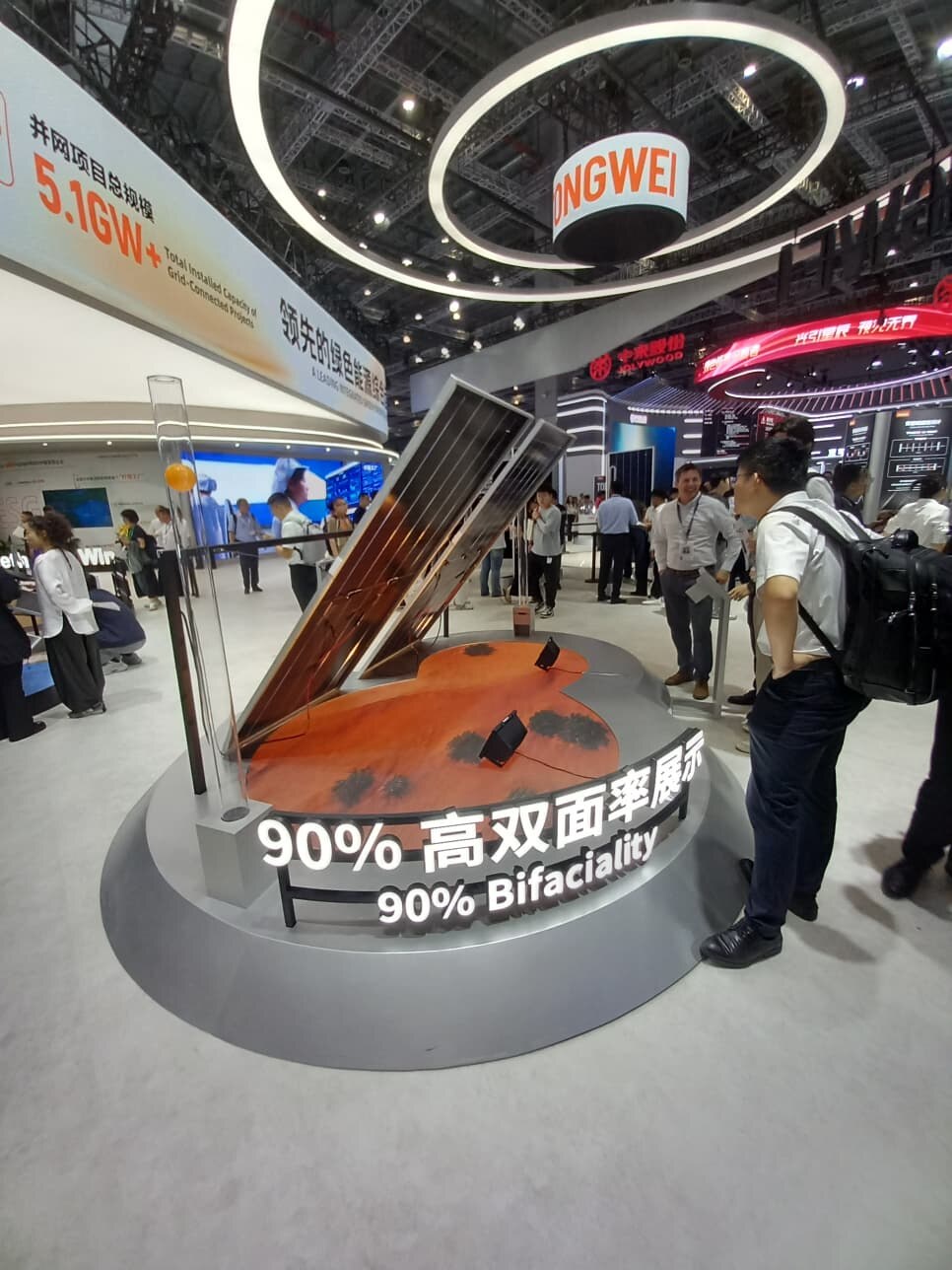
The most impressive modules on display were based on all-back-contact (ABC/IBC-type) architectures. These modules combine very high efficiencies with surprisingly high bifaciality. Several manufacturers demonstrated back-contact modules with bifaciality factors exceeding 70%, which would have been difficult to achieve only a few years ago.
Overall, module efficiencies of 23–24% seem to be becoming standard among leading manufacturers, particularly for large-format utility-scale products.
4. Reliability Concerns in Silicon Modules
An important topic discussed during the conference was module reliability. Kiwa presented results from its newly introduced module scorecard program, which evaluates newly released PV modules.
According to the presented data, approximately 90% of newly tested modules exhibited issues in at least one evaluation category. This represents the highest failure rate observed in the history of the testing program.
The results suggest that the industry's strong focus on increasing power output, reducing costs, and introducing new module designs may be creating additional reliability risks. Reliability therefore remains a key challenge even for mature silicon technologies.
5. Perovskite and Tandem Technologies
Perovskites were undoubtedly one of the dominant topics at the conference. A large fraction of presentations focused on perovskite materials, tandem architectures, manufacturing approaches, and reliability studies.
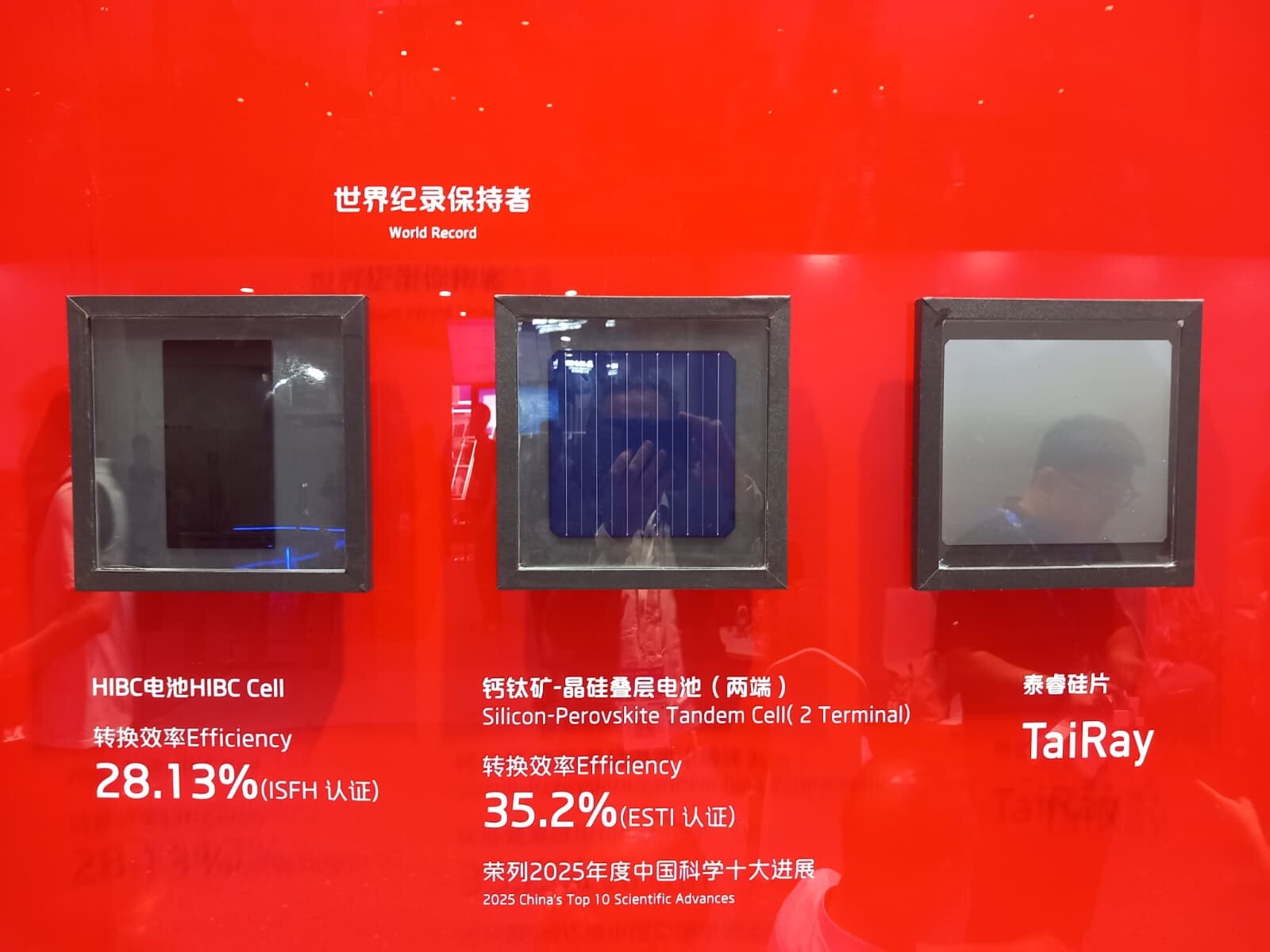
Several companies exhibited perovskite-based products. Trina Solar presented a silicon-perovskite tandem module with a power output slightly above 900 W. For comparison, its corresponding silicon-only module achieved approximately 800 W. This indicates a current module-level power gain of roughly 10–15% from the perovskite top cell.
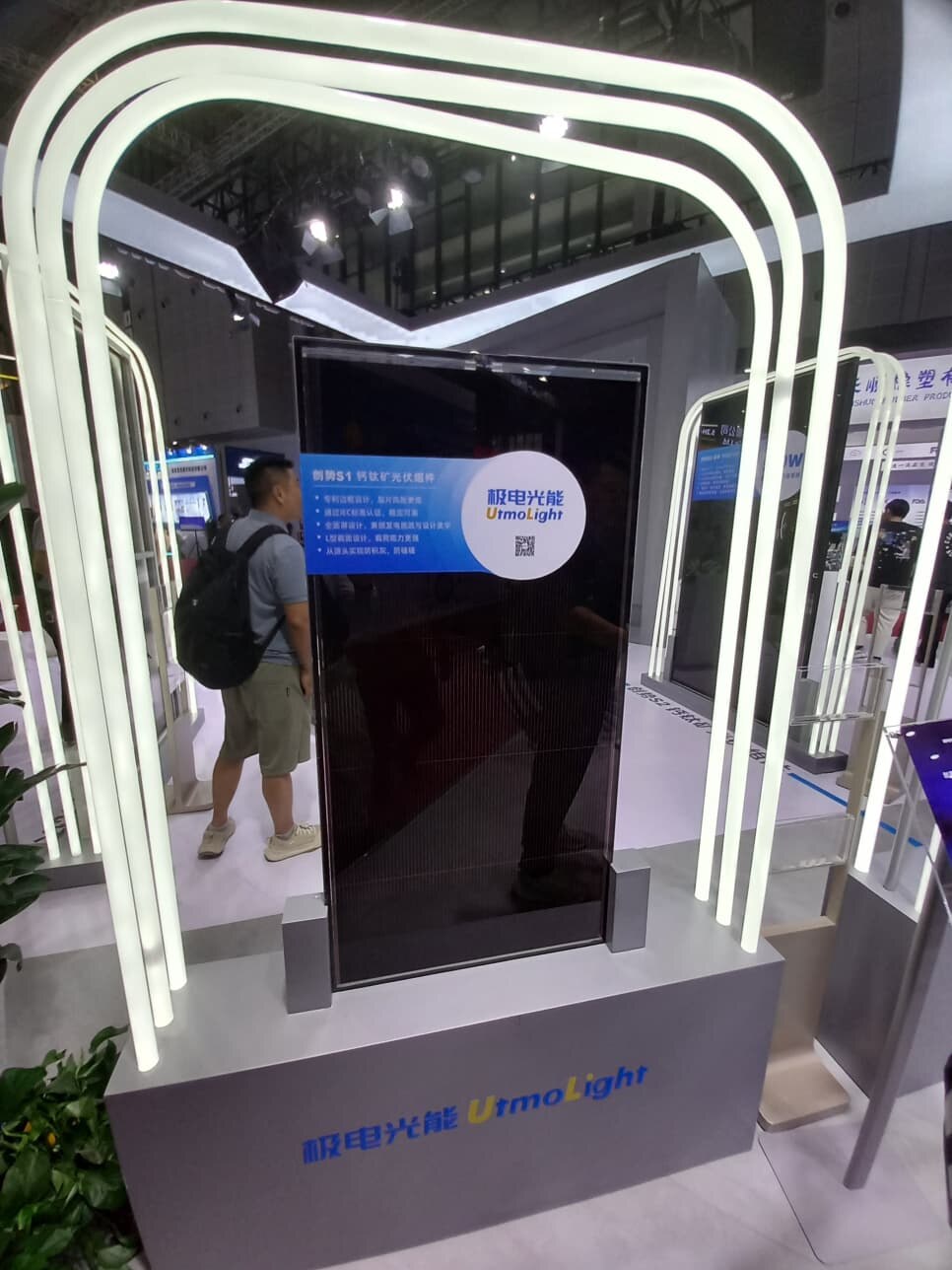
UtmoLight exhibited a large-area perovskite module with a power output around 500 W and an area approaching 3 m².
Despite these demonstrations, the exhibited perovskite modules appeared to originate primarily from pilot production lines or development facilities rather than mature industrial-scale manufacturing — they still lack nameplates. Commercial deployment therefore still appears limited.
6. Reliability Remains the Main Challenge for Perovskites
The most significant challenge for perovskite technology remains long-term stability.
Martin Green presented results from outdoor testing programs evaluating perovskite modules from different manufacturers. The reported metric was the estimated time required for module performance to decline to 80% of the initial value (T80).
The results were sobering:
- Most tested modules did not achieve a projected T80 lifetime of six months.
- Some modules reached approximately one to one-and-a-half years.
- The best-performing modules achieved slightly less than two years.
These results indicate degradation rates that remain far above what is acceptable for commercial PV deployment. While efficiency improvements continue to be impressive, long-term reliability remains the primary obstacle to large-scale commercialization.